
Research Labs and Projects

explore your interests
We welcome you to participate in our ongoing labs and projects—and find the one that is right for you. Please contact the faculty listed in each subject area below to get involved in research and gain valuable experience that you can apply to future careers in psychology.
Clinical Ethnography Lab

Clinical Ethnography Lab
Dr. Talia Weiner works with students to use ethnographic research methodologies to explore the intersections of clinical interactions, cultural conventions, political processes, and lived experiences. By reading and producing ethnography, students in this working group analyze questions about the interplay between psychiatric expertise and individual experiences of mental illness, interrogate psychiatry and psychology as social institutions, and reflect on the role of the ethnographer’s situated subjectivity in the research process.
Collaborative Academic Network (CAN) Lab

Collaborative Academic Network (CAN) Lab
Dr. Corri Johanson facilitates the Collaborative Academic Network (CAN) Lab, a supportive community for students who share creative and inspiring psychology research projects while learning how to present their work in academic settings. Whether students are presenting in class, at a conference, during a capstone defense, or are simply curious about CAN, the lab helps participants become more familiar with the process of preparing academic research for scholarly presentation and supports its inclusion within the field. Most rewardingly, participation in the CAN Lab fosters the development of a collaborative network of psychology scholars that can last for years to come.
Critical Embodiment Research Lab (CERL)
Critical Embodiment Research Lab (CERL)
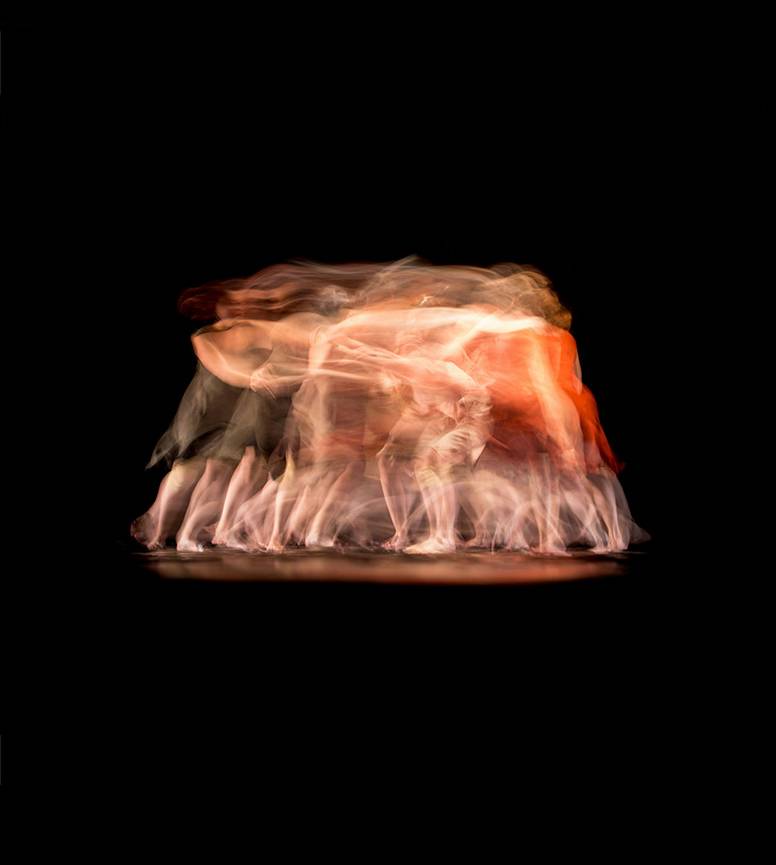
Dr. Rossella Traversa conducts research on embodiment, that is, how people use their bodies to engage with the world. The Critical Embodiment Research Lab (CERL) is focused on studying what counts as a body—from a new materialist and natureculture perspective—in fields like gender, sexuality, pleasure and pain, death and end of life, critical neuroscience, and subjectivity. More specifically, CERL welcomes students, visiting scholars, and faculty interested in doing qualitative and mixed-method research on visibility and invisibility, critical approaches to the duality of intimate relationships, adult entertainment, thanatology and queer perspectives on death, gender/sexual passing and transitioning, and feminist approaches to the neuroscientific body, including neurotransmitters, hormones, and their behavioral correlates.
Both undergraduate and graduate students are invited to participate in research.
Discourse and Social Interaction Lab

Discourse and Social Interaction Lab
Dr. Neill Korobov works with graduate students to both conduct and read discourse analytic research—critical discourse analysis and applied conversation analysis—around a range of topics that include identity, gender, and romantic partnerships. For the last several years, he has worked with students to explore the ways couples pursue intimacy, connect, and create affiliation while bantering, telling stories, arguing, and sharing their desires.
Exceptional Experiences Research Lab (EERL)

Exceptional Experiences Research Lab (EERL)
Dr. Christine Simmonds-Moore conducts research on exceptional experiences, including alterations in consciousness, experimental parapsychology (i.e. extrasensory perception and mind-matter interactions), subjective paranormal phenomena, and transpersonal/spiritual experiences. Her projects include psychometry, float tank experiences, and extrasensory perception, in addition to ecological consciousness and extrasensory perception. Other members of the lab include Dr. Jake Glazier who conducts research on local folklore.
Existential Psychology Lab

Existential Psychology Lab
Dr. John L. Roberts engages with and supports graduate students in research involving existentialist orientations into experience, meaning making, and suffering. These inquiries draw upon historically grounded existential themes such as anxiety, being-in-the-world, and being-for-others, with an emphasis on their appearance in psychology. Such research explores intersections with other philosophical traditions, including postmodernism, feminism, and natural science understandings of psychological life. Participants discuss their own particular research projects by forming reading groups and receiving feedback on their writing processes.
Living Language Lab

Living Language Lab
Dr. Marie-Cécile Bertau engages a group of graduate students in research around language viewed as a dialogical process that relates the interpersonal with the intrapersonal dimensions of experience. The group investigates:
- How different voices are lived and experienced by individuals
- How voices influence meaning-(form)-making
- How the collective or cultural voice belonging to a community’s social-cultural norms and beliefs is represented through media, on objects and buildings, and through certain others.
Besides understanding and further developing theorizing, the lab allows common analyses of language data that translate into students’ research projects.
Moral Injury and Mattering Lab

Moral Injury and Mattering Lab
Dr. Richard La Fleur works with students in the moral injury and mattering lab to explore the felt sense and impact of moral injury in people in the context of recent world events and the shame, helplessness, and guilt that can result from that.
While moral injury and mattering are closely connected, we distinguish what they are and how they shape our experiences. Moral injury refers to the psychological, emotional, and spiritual suffering that arises when deeply held moral beliefs are violated, by one’s own actions or the actions of others, in various contexts.
Mattering, by contrast, speaks to the relational experience of being needed, valued, and significant to others. To matter is to feel that we are worthy of attention, that our presence makes a difference, and that we both depend on others and are depended upon in meaningful ways.
Narrative Research

Narrative Research
Dr. James Christopher Head conducts narrative research that explores narrators’ experiential accounts in order to understand how they navigate the material conditions of their lives, construct meaning from those experiences, and negotiate the psychological complexity of those meanings. He is currently supporting a group of doctoral students to construct narrative research projects that investigate narrators’ navigation and negotiation of salient historical moments. This working group is an extension of the Narrative Psychology course (PSYC-7810B).
Phenomenological Art Collective
Phenomenological Art Collective
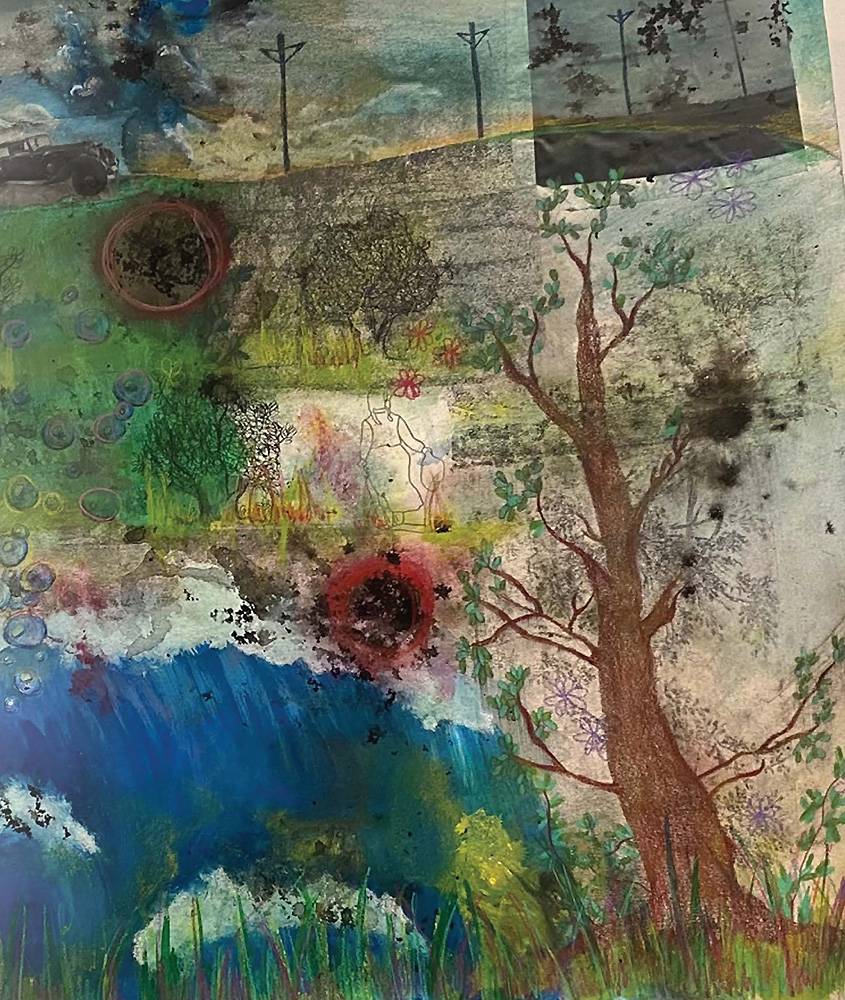
The Phenomenological Art Collective is an arts-based research lab launched by Dr. Nisha Gupta that guides UWG students to disseminate qualitative research to the public through the expressive arts for community healing, psychoeducation, and social change. The lab teaches students a three-step process that follows the methodology of arts-based phenomenological research for public scholarship:
- Conducting phenomenological research about people’s psychological and sociocultural experiences
- Expressing research findings as art such as film, poetry, and paintings
- Exploring ideas to disseminate the phenomenological art to the public to initiate therapeutic community dialogues through workshops, screenings, exhibitions, and events.
Psychological Studies of Science and Technology (PSST!)
Psychological Studies of Science and Technology (PSST!)
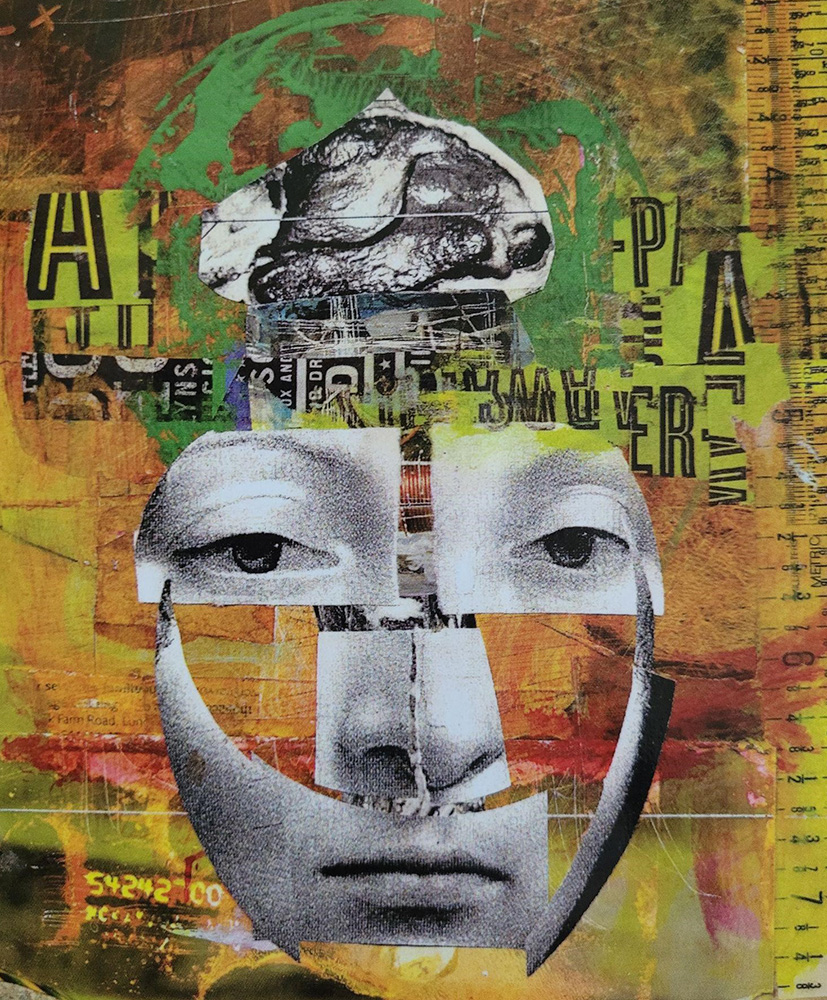
Dr. Lisa Osbeck works with students to explore the psychological dimensions of science—science as practiced by persons—which overlaps with the philosophical study of science and with science and technology studies (STS). Student projects have included studies relating to replication, generalizability, the psychology of model development, imagination in science, motivation for commitment to environmental science, psychological case studies of scientists, and values in psychology, using theoretical and qualitative inquiry.
Relationality Research Lab

Relationality Research Lab
Dr. Jeff Reber works with graduate and undergraduate students on research that assumes a holistic relational understanding of psychology as opposed to an atomistic/individualistic view of psychology. This lab is also the editorial home of the journal Issues in Religion and Psychotherapy (IRP).